


In Part 8, I detailed the pivot to a family-run project, the challenges of AI agent variability, and the decision to turn SnowSure into a dedicated mobile app. The journey was filled with frustrations but also profound moments of progress.
Part 9 is about grappling with the realities of scaling a one-person digital business. It’s a story about the high cost of quality data, the slow pace of legacy industries, and the internal debate every founder faces: am I working on the right thing? As the technical challenges mount, the philosophical questions get louder.
The Data Gatekeepers
The biggest hurdle for SnowSure remains data quality. The data I’ve pieced together is good, but it’s not perfect. To take the next step, I need a single source of truth. Cursor recommended I reach out to SnoCountry, a major API provider for the ski resort industry.
Their response was a stark reminder of the old way of doing business. Access to their API would cost anywhere from a few thousand dollars to over $5,000 per year. For an established business, that might be a fair price. For a one-person project still in the experimental phase, it’s a non-starter. It feels like a legacy, “good old boys” product, completely misaligned with the future of easy data distribution that AI enables. My thought is simple: if these companies don’t adapt, someone will disrupt their business for them.
The Scaling Paradox
The project has reached a new level of complexity. I’m now running four laptops, each with Cursor windows open, some with multiple agents working simultaneously. I’m sitting on a ski gondola in Italy, writing out prompts on my phone to fix bugs I see in the app. I need to figure out how to get Cursor running in the cloud so I can manage this from anywhere.
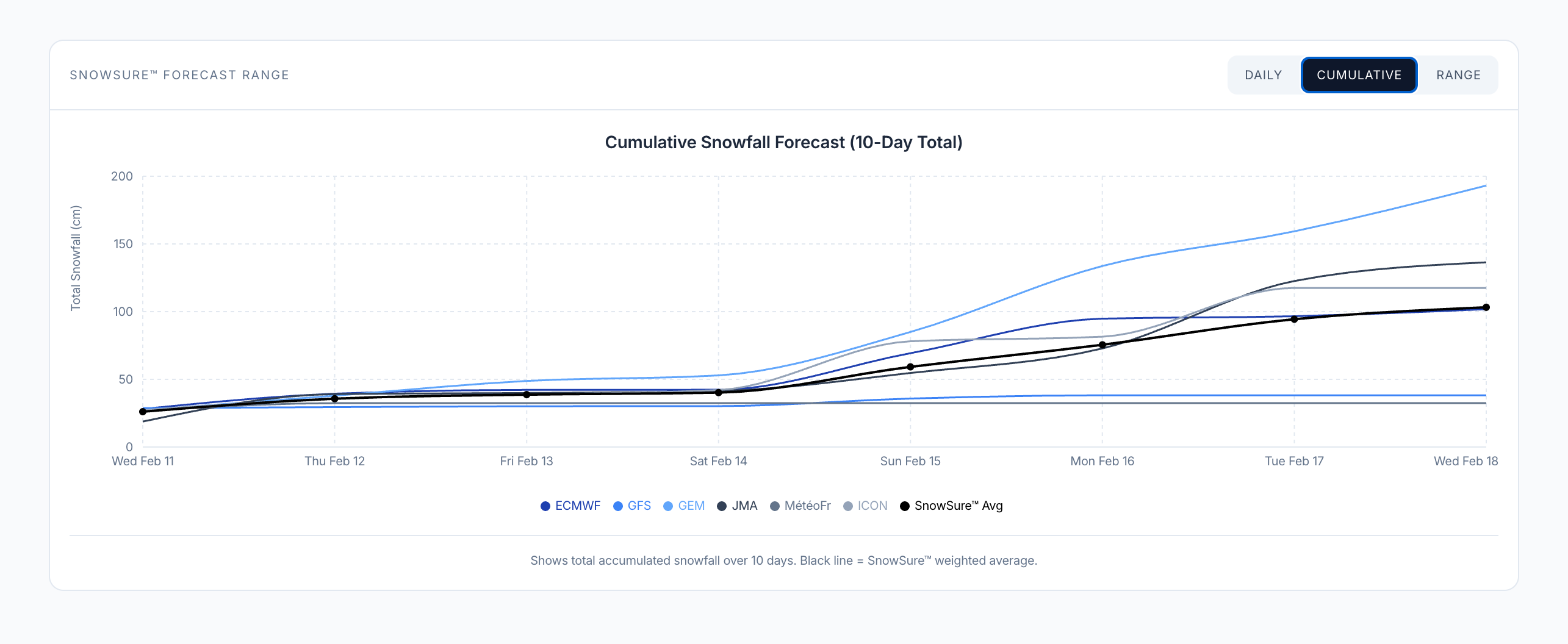
With this scale comes a new set of problems. The app feels stable, but I’m constantly worried about the backend. Weather and webcam syncs stop mid-process. Is it a server issue? A code issue? How will this system handle real traffic? The initial speed of AI development has been replaced by the slow, methodical work of ensuring reliability.
This has forced me to become my own venture capitalist. With so little time, I have to constantly evaluate how I spend it. Every feature, every bug fix, is an investment. I have to ask myself, is this the most valuable thing I could be working on right now?
A Glimmer of Hope: The Hotel API

Just as I was getting lost in the weeds of weather map development—a task that has proven incredibly difficult for my AI agents—a breakthrough happened. After months of applications and waiting, I finally received access to a major hotel booking API.
Suddenly, the original vision for Lux.ski was back in play. Full steam ahead.
However, this excitement was quickly tempered by another AI-induced headache. Cursor, my trusted CTO, was telling me that the shiny new API had almost no inventory for the luxury ski hotels I feature. It claimed only three of my hotels were bookable.
This didn’t pass the common sense test. Why would a booking company give me an API that had no inventory? I challenged the agent, pushing back against its confident assertions. In the end, I was right. It was a sandbox configuration issue, not a lack of inventory. It’s another stark reminder: you cannot fully trust what an AI tells you, no matter how confident it sounds.

The Daily Grind of an AI Product Manager
The process of building has settled into a new rhythm. I find bugs while using the app with my son over the weekend. I write down prompts. I feed them into the queue. The agents fix them. It’s an incredibly efficient loop, but it has its own frustrations.
Cursor often crashes, losing the entire queue of tasks I’ve meticulously loaded. A tip for fellow builders: write your prompts in a separate notes app first, then copy them into the agent’s chat.
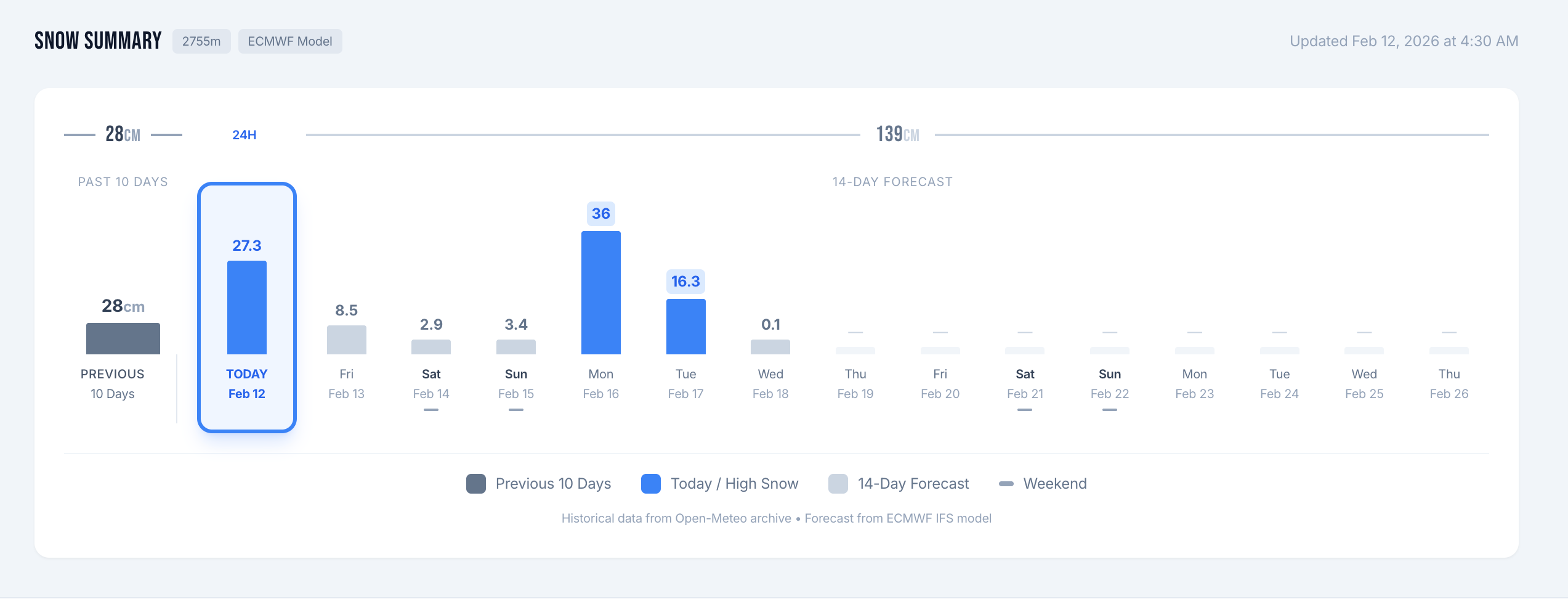
I’ve also noticed that agents sometimes take bizarre shortcuts. I asked one to pull the “past 10 days of snow” from my Open-Meteo data feed. Instead, it created its own estimation by multiplying the 7-day total by 1.43. It made up data because it thought it was a faster solution. I had to specifically tell it to stop making up estimates and use the real data. The AI sometimes thinks it’s smarter than the human guiding it.
If You Don’t Start, You’re Already Behind
This journey, from a simple experiment to a multi-platform digital business, has taken just over two months. The pace is astonishing. All the learnings from these personal projects have given me the confidence to apply the same tools at my day job, accelerating our own internal development.
I’m often reminded of a quote from the legendary ski filmmaker Warren Miller: “If you don’t do it this year, you will be one year older when you do.”
That is my exact sentiment about AI. If you’re a designer, a product manager, or anyone with an idea, you can no longer afford to wait. The barrier to entry has collapsed. You need to stop what you are doing and make AI a priority.
As for my own projects, the work continues. We are on version 60 of the SnowSure app and still haven’t released it. 90% of the work has been testing and stability. The hotel booking certification process is a bureaucratic nightmare that AI can’t speed up. But we are making progress. Every day, the product gets a little better, a little more stable. And every day, I learn something new about what it means to build in this incredible new era.